
Septic System Installation, Drain Fields, Tank Pumping & Repair for Homes Across Fayetteville, NC
Get a Free Quote
Thank You!
We'll get back to you shortly. For immediate help, call (910) 600-6919.

Septic Fayetteville installs, pumps, and repairs septic systems for homeowners across Fayetteville and Cumberland County. When you need a new system for a build, or a replacement for one that has failed, we handle the whole job: the soil and site evaluation, the county permit, the tank, and the drain field. We also keep existing systems running with routine pumping and repairs. We work on conventional systems and the alternative systems that tighter lots and higher water tables call for.
Most homes out here, especially in the rural and unincorporated parts of the county, run on a private septic system instead of city sewer. What your lot can support comes down to the ground under it. Fayetteville sits in the Sandhills and upper Coastal Plain, where sandy topsoil often sits over a clay layer, and low-lying areas can hold a seasonal high water table. Those conditions decide how a system is sized and which type fits, which is why North Carolina requires a soil and site evaluation before the county issues a permit. We read the lot first, then build to what it needs.
These are the problems that usually mean a system needs replacing or a new one installed, not just another pump-out.
When toilets gurgle and back up, drains run slow across the whole house, or you smell sewage, the system is struggling to move water. If the ground over the drain field stays soggy, smells, or grows a bright green strip of grass, effluent is surfacing instead of soaking in. A pump-out may buy time, but a surfacing field usually means the system itself needs work.
The drain field is where the real work happens, and it is the part that wears out. When it clogs or stays saturated, water has nowhere to go, so backups and standing water come back soon after every pump-out. Once a field has failed, it almost always needs to be replaced rather than patched, often with a new or larger field.
Buying or selling a home on septic usually means an inspection, and a system that fails it can hold up the sale. If the tank is cracked, the field is failing, or the system is past its life, a replacement or new system is often what it takes to close. We inspect, tell you honestly where it stands, and price the fix.
A tank that is decades old, a steel tank that has rusted through, or a system built for fewer bedrooms than the home now has are all living on borrowed time. Adding a bathroom or finishing a basement can push an older system past what it was sized for. When that happens, a new system sized to the house is the lasting fix.
New systems, replacements, pumping, and repair for homes across Fayetteville and Cumberland County.
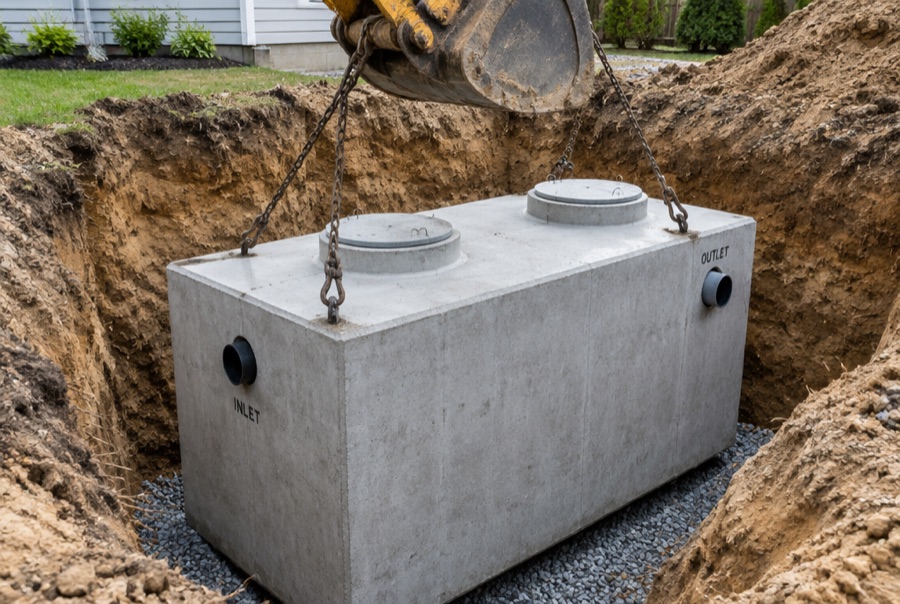
Installing a new septic system is the core of what we do, whether it is a brand-new system for new construction or a replacement for one that has failed. We handle the whole job from the ground up: the soil and site evaluation, the Cumberland County permit, setting the tank, and building the drain field. We install conventional gravity systems and the alternative systems that lots with tight space or a higher water table require.
Every install starts with the ground. A soil and site evaluation decides what the lot can take, and the county uses it to set the trench type and loading rate before a permit is issued. From there the tank is sized to the home, 900 gallons for three bedrooms or fewer, 1,000 for four, and 1,250 for five under North Carolina rules, and the drain field is sized to both the home and the soil. On harder lots we install low-pressure pipe or pretreatment systems that work where a standard gravity field will not.
Because a new system is a major investment, we give you a straight read first. If a repair will genuinely hold, we will tell you that instead of selling a full replacement. If the system is truly at the end of its life, we size and build the right one for your house and your lot. Every job starts with a free on-site evaluation, handled by licensed, insured installers who manage the county permitting from start to finish.
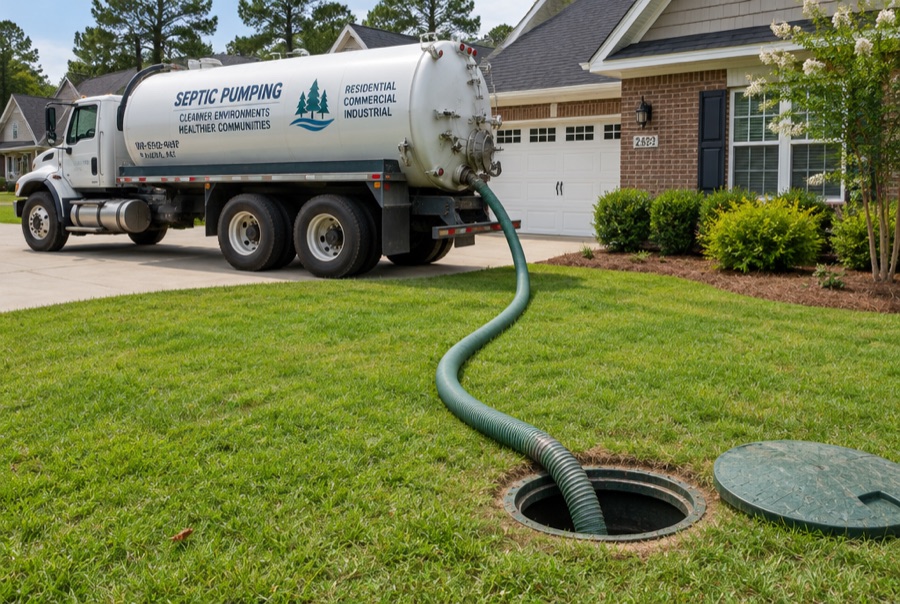
Routine pumping is the single best thing you can do to protect a septic system. Over time, solids settle in the tank and build up, and if they are not pumped out they flow into the drain field and clog it, which is the most expensive repair on a septic system. A pump-out is cheap insurance against a failed field.
How often a tank needs pumping depends on its size and how many people use the house, usually every three to five years for an average household, and sooner for a smaller tank or a larger family. When we pump, we do not just empty the tank, we check the baffles and the filter, look at the sludge and scum levels, and flag anything starting to go wrong while it is still a small fix. If drains run slow, the tank gurgles, or odors show up, it is often time to pump.
We give you a clear price before we start, keep the schedule, and leave the site clean. If a pump-out turns up a bigger problem, like a failing field or a cracked tank, we tell you honestly and price the repair separately. Every visit starts with a straight quote and no pressure.
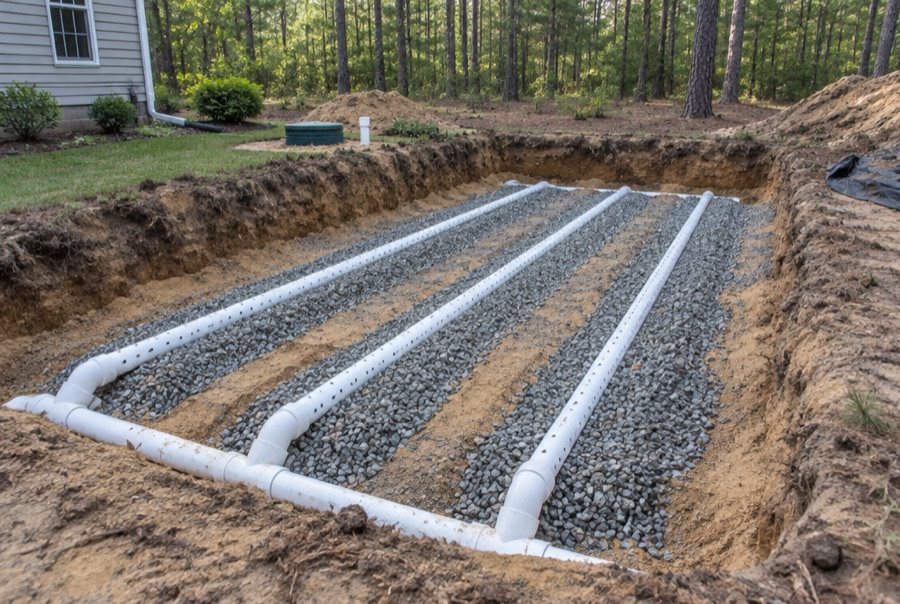
When a system acts up, we find out why and fix it. Common repairs include clearing backups, replacing a failed pump or float, fixing cracked or collapsed pipes, repairing baffles and filters, and addressing a drain field that has started to fail. The symptom is usually a backup, a wet spot in the yard, or a slow-draining house, and the cause is underneath it.
The key with any septic repair is diagnosing the real cause, not just chasing the symptom. A backup can be a simple clog or a sign the drain field is done, and those are very different fixes. We dig into what is actually happening and tell you honestly whether a targeted repair will hold or whether the system has reached the point where a replacement is the smarter spend. When a drain field can be repaired, we repair it; when it cannot, we say so.
Every repair starts with a free on-site diagnosis, so you get a clear answer and a clear price before any work begins. We fix what needs fixing, leave what is still good alone, and never sell you a bigger job than the system needs.
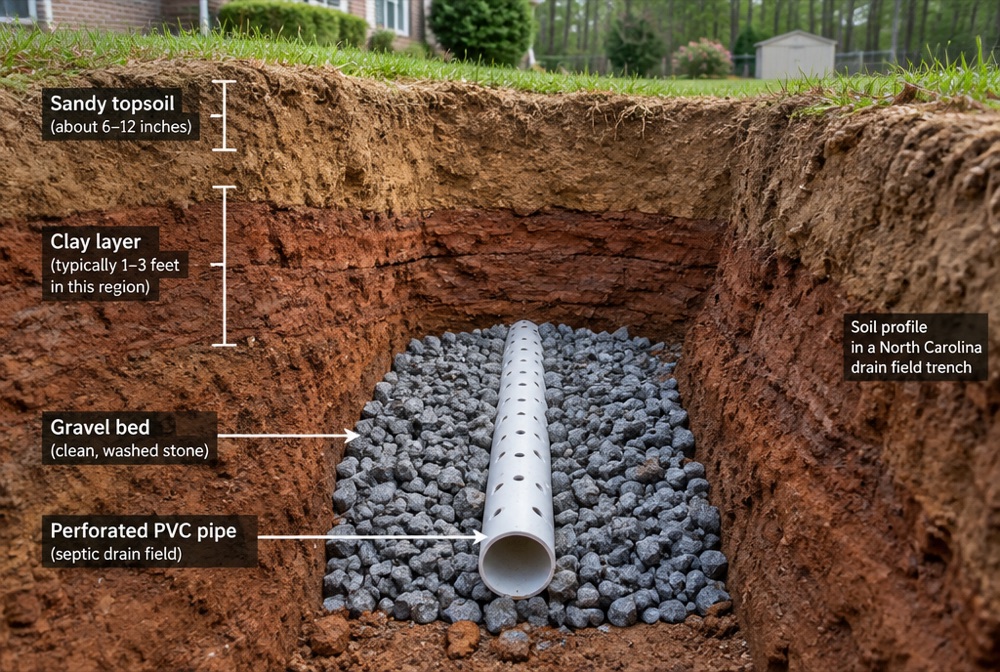
In Cumberland County, a new septic system does not start with a shovel, it starts with the county. Before anything is installed, North Carolina requires a soil and site evaluation, and Cumberland County Environmental Health uses it to decide what your lot can support and to issue the permit. Here is how that process works and why it shapes the whole system.
Every system begins with a soil and site evaluation. An evaluator digs into the lot and reads the ground, how deep the usable soil runs, how sandy or clay-heavy it is, and how close the water table sits to the surface. Fayetteville's Sandhills and Coastal Plain soils are often sandy over a clay layer, and how deep that sand runs is one of the first things the evaluation measures, because it sets what the lot can handle.
The evaluation is not a formality, it sets the hard numbers the system is built to. It establishes the trench type and the loading rate, which is how much water the soil can safely absorb per square foot, and those drive how large the drain field has to be. Better-draining sandy soil can take more water in less space; tighter or clay-heavy soil needs a bigger field. The county will not issue a permit until the ground has had its say.
In lower and wetter parts of the county, a seasonal high water table changes what is possible. A drain field needs enough dry soil beneath it to treat the water before it reaches groundwater, so a high water table limits a standard system. On those lots the evaluation may call for a shallower, raised, or alternative system, such as low-pressure pipe or a pretreatment unit, built to work in wet ground.
Once the evaluation is done, Cumberland County Environmental Health issues the permit that spells out what can be built and where. From there the system is installed to match it, and inspected before it is covered. This is why the permit is not red tape, it is what guarantees the system is sized and placed for the ground it sits in, and why we handle the full process so you do not have to.
The short version: the ground decides the system, and the county confirms it. We read the lot, follow the soil and site evaluation, pull the permit, and build the system the evaluation calls for, so it lasts instead of failing early.
The permit-and-soil-driven process that separates a system that lasts from one that fails early.
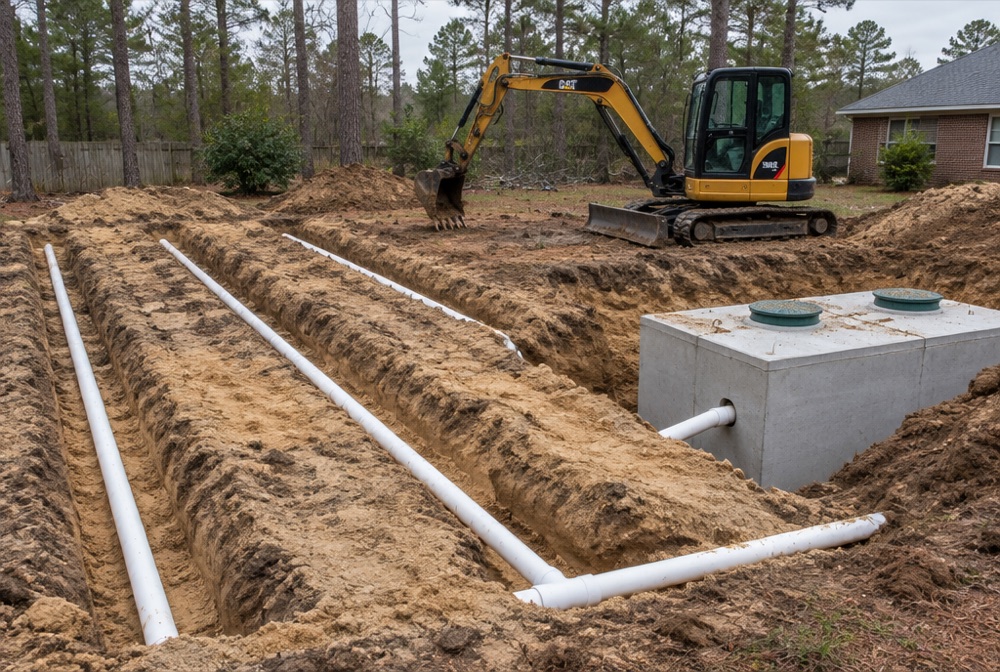
Every install begins in the ground, not on paper. We evaluate the soil and the site to see what the lot can support, then handle the Cumberland County permit based on what the evaluation finds. This step sets the trench type and loading rate, and getting it right is what keeps the system from failing later.
Next we size the system to your home and your soil. The tank is sized by the number of bedrooms, and the drain field is sized to how much water the ground can take. If the lot calls for it, we plan a low-pressure pipe or pretreatment system instead of a standard gravity field. You get a clear plan before any digging starts.
With the permit in hand, we excavate, set the tank level on a proper base, and build the drain field with the pipe, gravel, and distribution laid out the way the soil requires. Careful grading and clean connections here are what let the system drain evenly and last, so we take the time to do the underground work right.
Before the system is covered, it is inspected to confirm it is built to code. Then we backfill, grade the yard back, and leave the site clean. You end with a permitted, working system, the paperwork that proves it, and a straight explanation of how to keep it running for the long haul.
Septic is not a sideline we fit between other jobs, it is the work. That means a crew that knows how these systems are built, how the local ground behaves, and what makes one last, instead of a general contractor figuring it out on your property.
A septic job in Cumberland County runs through the county health department, and we handle that whole process for you, the soil and site evaluation, the permit, and the final inspection. You do not have to chase paperwork or learn the code; we manage it start to finish.
No two lots drain the same, so we do not install the same system everywhere. We follow what the soil evaluation tells us and build the type that fits your ground, whether that is a conventional system or an alternative one for a tight or wet lot. That is what keeps a system working for decades.
When you call, you get an honest read, not the biggest job we can sell. If a repair will hold, we will tell you. If the system is truly done, we will tell you that too, and price the right fix. Every job starts with a free on-site look and one clear number.
Most septic companies will not put a number on their site. We will. These are typical ranges from cost data to help you plan, your exact price depends on your soil, your system, and the size of the job, so every job gets a free on-site evaluation first.
A full system, tank plus drain field, sized to your home and soil. Replacements often start around $4,900.
Priced by tank size. Most households pump every three to five years.
From a minor fix to a major repair. A full drain-field replacement runs higher.
What moves the price: your soil and water table, the system type the lot needs, the tank size, how big the drain field has to be, access to the site, and the county permit and soil evaluation.
These are typical ranges for planning, not a quote. Every lot and system is different, so we price yours at a free on-site evaluation before any work begins.
Straight answers from our free on-site evaluations around Fayetteville and Cumberland County.
A new septic system in North Carolina typically runs between about $6,300 and $17,800, with a full tank-and-drain-field install for a standard home often landing in the middle of that range. The real number depends on your soil, the system type the lot needs, the tank size, and how large the drain field has to be. We give you one clear price after a free on-site evaluation.
The clearest signs are sewage backing up, slow drains across the whole house, or soggy, smelly ground over the drain field. A drain field that keeps failing after pump-outs, a cracked or rusted-out tank, or a system that failed a home-sale inspection usually points to a replacement rather than another repair. We will tell you honestly which one you are looking at.
Most homes use a conventional gravity system, where water flows from the tank into a drain field and soaks into the soil on its own. When the soil, slope, or water table will not allow that, there are alternatives: a low-pressure pipe system pumps water into shallow trenches across the lot, and a pretreatment unit cleans the water further before it reaches the field. The soil and site evaluation decides which type your lot can support.
The drain field, also called the leach field, is the set of buried perforated pipes and gravel where water from the tank soaks into the soil and is treated. It is sized to your home and your soil, based on the number of bedrooms and how much water the ground can absorb, which the soil and site evaluation determines. Better-draining soil needs less field; tighter soil needs more.
Most households need a pump-out every three to five years, though a smaller tank or a larger family may need it sooner. Pumping keeps solids from reaching the drain field, which is the part most expensive to repair. If drains run slow, the tank gurgles, or you notice odors, it is usually time.
No. In North Carolina a septic system requires a soil and site evaluation and a permit from Cumberland County Environmental Health before it can be installed, and the work has to meet the state code. It is not a DIY job, which is why we handle the evaluation, the permit, the install, and the inspection for you.
Usually, yes. Most home sales on septic include an inspection, and lenders often require one. We inspect the tank and drain field, check for backups or surfacing, and give you a clear written report. If the system fails or is near the end of its life, we tell you what it takes to fix or replace it so the sale can move forward.
A well-built septic system can last twenty to forty years, and the drain field, the part that wears out, often lasts twenty to thirty. What makes the difference is pumping on schedule, keeping heavy traffic and roots off the field, and not overloading it. Regular pumping is the cheapest way to get the full life out of a system.
Yes. Every job starts with a free on-site evaluation, where we look at the system or the lot, figure out what is actually needed, and give you one written price before any work begins. There is no charge and no obligation.
We install, pump, and repair septic systems across Fayetteville and the surrounding Cumberland County communities.